English
  Português
  Deutsch
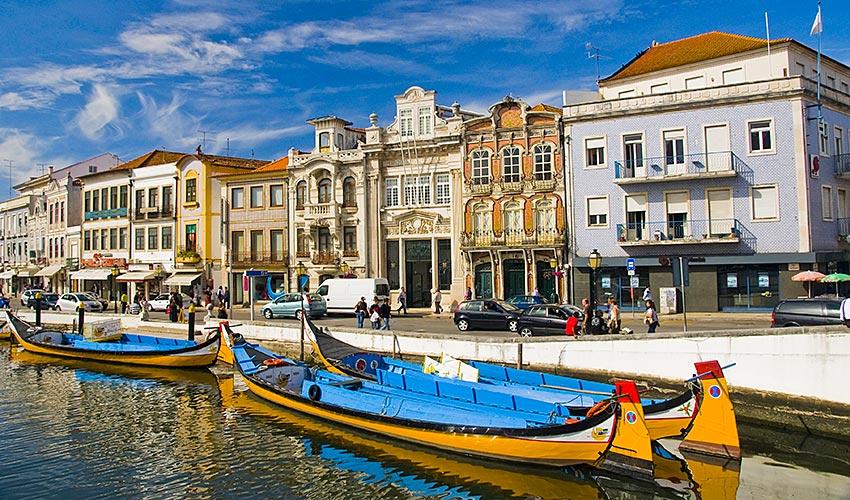
The district of Aveiro captures the essence of the perfect picture-book destination, with its colourful gondola-shaped boats, natural lagoons, elegant 19th Century architecture and traditional cobblestone passageways – this is a special place where old meets new.
Situated in the Baixo Vouga sub-region between the Atlantic Ocean and the mountainous surroundings of its neighbouring districts, Aveiro’s rich landscape is characterised by its sandy coast, beautiful estuary, gardens and parks.
Commonly nicknamed the ‘Portuguese Venice’, the enchanting capital city of Aveiro is crossed by a shimmering canal and is considered one of the most charming destinations in the country for its brightly patterned moliceiro boats, array of pastel-tinted Art Nouveau buildings and its calm urban atmosphere – a scenic backdrop for your holiday.
While in the city centre, make your way to the famous Mercado do Peixe, a traditional fish market that houses one of Aveiro’s most acclaimed seafood restaurants. A variety of dining establishments, as well as a fun selection of bars and shops can all be found nearby. Stop at any typical café whenever strolling through the city and taste the heavenly ovos moles, the district’s sugary, egg-based delicacy. Also be sure to enjoy one of the many free-hire BUGA bicycles during your holiday and ride along Aveiro’s glistening canal, its picturesque streets and visit some of its foremost attractions.
Travel further into the district and discover Ílhavo, a seaside city that represents Aveiro’s thriving maritime heritage and home to the internationally acclaimed Vista Alegre porcelain factory. See Portugal’s oldest lighthouse in Praia da Barra and stop by Praia da Costa Nova to find Aveiro’s iconic, multicoloured striped houses. These beaches are also excellent spots for soothing days in the sun and to enjoy an array of water sports.
Taste the ‘convent sweets’ that the town of Arouca is so well-known for and visit the southern city of Mealhada to enjoy a traditional meal of suckling pig and regional Bairrada wine. To complete your holiday, find relaxation in Luso and Curia, two quaint towns known for their magnificent hot springs and natural beauty.
Places to see
Religious Architecture
Igreja da Misericórdia (Our Lady of Mercy Church)
This church is one of the most charming examples of religious architecture in the district. Built towards the end of the 16th Century, this monument displays traditional blue-and-white tile work on its façade, Renaissance features on its portals and a lovely selection of colourful azulejos in its interior.
Convento de Jesus (The Jesus Convent)
Founded in the 15th Century, this former Dominican convent is strongly associated to Aveiro’s most influential Princess – Saint Joan of Portugal. Famed for her lifelong devotion to religion, the Princess joined the convent in 1472 and lived there until her death. Today, you can visit the intricately sculpted marble tomb where this Princess saint has been laid to rest, as well as admire the detailed Baroque motifs, Manueline portals, Renaissance inspired cloisters and Mannerist chapels that beautify this historical monument.
Museums
Museu da Vista Alegre (Vista Alegre Museum)
Aveiro is home to the renowned Vista Alegre porcelain, an example of Portugal’s long tradition in ceramics. Situated within the original factory where these dainty works of art are produced, this museum is one of the district’s most sought-after attractions. Admire historical vestiges of the brand’s first pieces, glimpse through old sketches and learn how the tools used to create these porcelain wonders have evolved through time.
Museu de Aveiro (Aveiro Museum)
Located within the grandiose Convento de Jesus, this museum is regarded as one of the most significant sacred arts museums in the country. This museum exhibits a collection of Portuguese 17th and 18th Century paintings, meticulous tile work, elegantly carved features in gold, as well as a rich display of vestments, jewellery and valuable relics.
Museu Marítimo de Ílhavo (Ílhavo Maritime Museum)
This museum displays an interesting selection of Aveiro’s maritime ethnography, including fascinating examples of the district’s first moliceiro boats, a variety of navigation tools and pictures, as well as the largest collection of rare seashells in the country. In 2003, this popular museum was distinguished with the prestigious Mies van der Rohe Award for Contemporary Architecture for its modern design.
Nature
Parque Infante D. Pedro (Infante D. Pedro Park)
Spend a few moments away from the city centre and enjoy peaceful moments in one of Aveiro’s prettiest parks. Walk throughout abundant gardens, experience a soothing boat ride on a calm lagoon and visit the Hunting and Fishing museum located within the grounds – a great setting to enjoy a serene afternoon.
Reserva Natural das Dunas de São Jacinto (São Jacinto Nature Reserve)
Located at the tip of the beautiful São Jacinto peninsula between the sea and the estuary, this magnificent reserve is one of the most acclaimed natural sites in the country. Since its inauguration in the late 1970s, marshes, unspoilt lagoons and sand dunes have become a habitat for local flora and fauna and is also regarded as a popular bird sanctuary.
Be sure to experience a tour throughout this inspiring reserve, whether you prefer to follow its walking trails or enjoy a trip on the wonderful moliceiro boats.
Recommended Aveiro Hotels
Hotel Moliceiro