English
  Português
  Deutsch
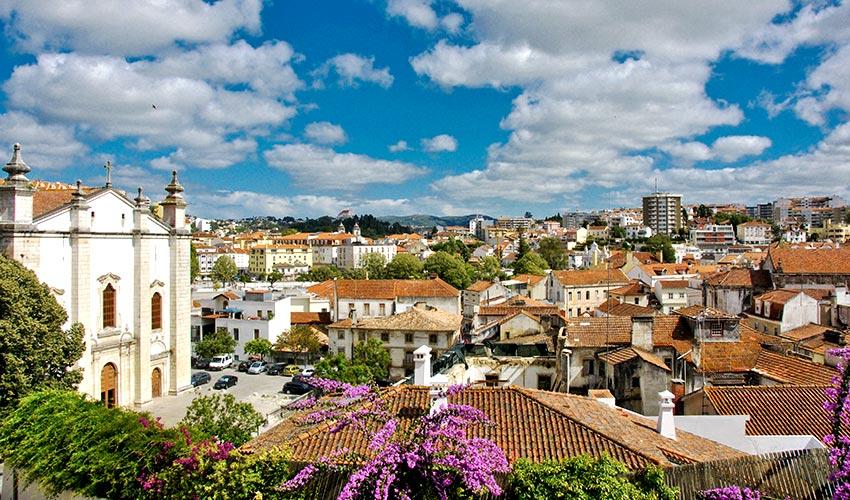
The district of Leiria is located inland from the coast and is home to a wide variety of unique towns and attractions, all offering different scenery, monuments and customs.
The charming fishing town of Peniche is situated on the coast and is a popular deep sea-fishing destination where you can also enjoy excellent seafood restaurants and regular ferry trips to the Berlenga Islands – a beautiful natural reserve surrounded by transparent waters.
Nazaré is another picturesque fishing village in the district and is popular for its spectacular, sandy beach on which fishermen still stretch out their nets. After visiting Leiria’s age-old castle, medieval Praça Rodrigues Lobo and Renaissance cathedral, make your way to the Batalha Monastery – a true masterpiece of Gothic architecture in the country. Also be sure to see the grandiose monastery in Alcobaça, a magnificent, medieval structure including a 12th Century church.
The popular city of Caldas da Rainha is famous for its traditional (and somewhat humorous) ceramics and crafts, while the city of Marinha Grande is renowned for being the largest glass manufacturer in Portugal. Discover Óbidos, an enchanting, whitewashed town surrounded by 14th Century castle walls.
Places to See
Fortaleza de Peniche (Peniche Fortress)
This fortress was an important military base during the Middle Ages and was completed in 1645. After many years of war, its strategic value began to decrease and it was eventually decommissioned. From that point on, the fortress was used as a shelter for Boer refugees at the beginning of the 20th Century, a detention camp for Austrians and Germans during WWI and a prison for those who opposed Portugal’s former regime. This fortress is also home to the Peniche Museum, which houses a collection of regional artefacts and historical documentation related to Portugal’s past dictatorship.
Igreja da Misericórdia (Our Lady of Mercy Church)
This church’s ceiling is its greatest highlight and is completely covered with 55 paintings depicting scenes from the New Testament – an example of the region’s legacy of talented 17th Century artists. Besides this magnificent display, you can also admire five extraordinary canvases painted by the Spanish-born painter, Josefa d’Óbidos, beautiful examples of tiles on the walls and several outstanding sculptures.
Mosteiro da Batalha (Batalha Monastery)
Also known as the Santa Maria da Vitória Monastery, this national monument was built by order of King D. João I as a gift of gratitude to the Virgin Mary after Portugal’s victory against Castile in the Aljubarrota Battle. Designated a UNESCO World Heritage Site, this unique structure was built in 1388 and is regarded as the country’s finest example of late-Gothic architecture. Depictions of the Apostles, Prophets, Angels and of Jesus Christ surrounded by the four Evangelists can be admired on the monastery’s portal. The tombs of King D. João I, D. Filipa de Lencastre and her child can be visited in the ‘Fundador Chapel.’ Beautiful stained-glass windows illustrating several Biblical scenes such as ‘The Visitation’, the ‘Adoration of the Magi’, the ‘Flight into Egypt’ and the ‘Resurrection of Christ’ embellish the monastery’s interior, while typical, gargoyle-shaped waterspouts adorn its exterior. The Batalha Monastery is undoubtedly one of the most beautiful examples of Gothic architecture in the country.
Mosteiro de Alcobaça (Alcobaça Monastery)
Situated in the fertile valley were the Alcoa and Baço rivers flow, this monastery was donated to the Cistercian Order by King D. Afonso Henriques after conquering Santarém from the Moors. Today, only the portal, two large windows and the rose window between them remain from the structure’s original Baroque façade and towers. Inside the side chapels of the monastery’s transept are the intricately sculpted tombs of Prince D. Pedro I and his ill-starred lover, D. Inês de Castro. The transept also provides access to the tombs of King D. Afonso II, King D. Afonso III, their spouses and children. Other parts of the monastery that are located around the cloister include the ‘Chapter House’, the ‘Monks Room’ and an 18th Century kitchen and refectory. In the ‘Room of the Kings’, the lovely tiled panels and the clay statues of Portuguese monarchs are especially noteworthy.