English
  Português
  Deutsch
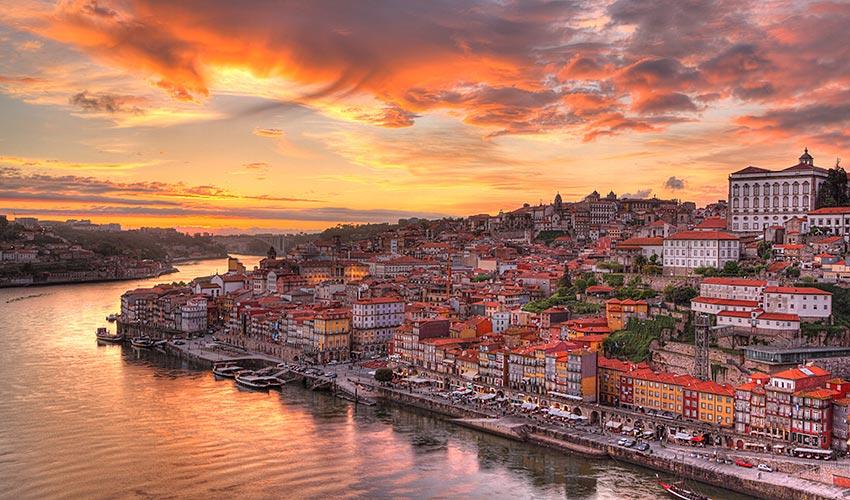
Porto is an enchanting city, established on the hills at the mouth of the Douro river. Designated an UNESCO World Heritage site for its historic buildings and outstanding monuments, highlights of Portugal’s second largest city include the formidable Porto cathedral, the Torre dos Clérigos and the conspicuous Port wine lodges that dominate the hillside of Vila Nova de Gaia. Although largely industrialised, Porto offers a compelling synthesis of ancient and contemporary attractions.
The province is a thriving commercial and industrial hub, filled with charming villages and prosperous towns. Take a drive along the roastline, stopping to explore the cosmopolitan resort of Espinho, sample freshly-caught seafood in the port of Matosinhos or take a gamble at the dazzling Casino da Póvoa. Head inland to the beautiful city of Amarante to try delicious pastries called papos de anjo and enjoy a stroll along the Tâmega river, which is lined with 17th century mansions.
Places to see
Caves do Vinho do Porto (Port wine cellars) (Vila Nova de Gaia)
Opposite the centre of Porto, on the southern bank of the Douro river, numerous Port wine lodges are a prominent tourist attraction. This sweet, fortified wine is produced from grapes grown in the Douro region and transferred to the cellars of Vila Nova de Gaia where it is blended and aged. Visitors can spend days touring the cavernous cellars along the waterfront (there are over 50 to choose from), while sampling dozens of world-class port varieties.
Sé Catedral (Porto)
Porto’s imposing cathedral was completed in the 13th century, although many aspects of the design have changed over the centuries. Featuring ornate carvings, paintings, sculptures and sacred religious treasures, as well as a marble chapel, a Romanesque rose window and intricate baroque azulejos throughout the cloister and terrace, the cathedral’s mesmerising grandeur is truly breathtaking.
Torre dos Clérigos (Tower of the Clergy) (Porto)
This baroque bell tower was completed in 1763 and looms high above the city. The tallest in Portugal, visitors can climb the 225 steps to enjoy the spectacular panorama. The adjoining oval-shaped Igreja dos Clérigos is an outstanding example of the synthesis of baroque and rococo architectural styles, featuring an intricate façade, elaborate engravings and a remarkable pipe organ dating back to 1774.
Casa da Música (Porto)
Conceived to mark Porto’s status as European Cultural Capital in 2001, Casa da Música is a dynamic modern concert hall dedicated to the creation and celebration of music. This cultural centre also offers guided tours and workshops and contains a restaurant and bars where visitors can relax. The myriad events range from jazz to classical performances, international DJs to world music.
Palácio da Bolsa (Former stock exchange) (Porto)
Featuring an impressive neoclassical façade, this striking former stock exchange was built in the 19th century. The building resembles a royal palace, particularly the ornate Arabian Hall (a replica of the Alhambra Palace in Grenada), which is used as a reception room for visiting heads of state. The palace has been majestically embellished with sculptures, paintings and frescos by numerous Portuguese masters and visitors can also attend cultural events and exhibitions, or enjoy a meal at the restaurant.
Museu de Serralves (Museum of Contemporary Art (Porto)
Surrounded by the extensive Serralves gardens, which is also used as an outdoor exhibition area, the Museu de Serralves was designed by renowned Portuguese architect Álvaro Siza Vieira. Featuring an outstanding collection of national and regional contemporary art dating from the 1960s, the museum also hosts a selection of cultural events, including concerts and educational workshops for children.
Antiga Cadeia da Relação (Old Relação Prison) (Porto)
This austere former prison is one of the landmark buildings in the history of Porto. Built in 1765, the triangular-shaped structure also housed the Court of Appeal. Numerous Portuguese personalities passed through the cells of this prison, including writer Camilo Castelo Branco, who wrote his famous romance Amor de Perdição while incarcerated. Since 2001, the building has been home to the Portuguese Centre for Photography, and still retains many original features.
Edifício do Instituto do Vinho do Porto (Institute for Port and Douro wines) (Porto)
The Institute for Port and Douro wines is situated in the heart of Porto’s historic centre and is responsible for ensuring the quality and authenticity of Douro wines. Marble memorial stones in the entrance hall commemorate important dates and events in the history of local wine production and visitors can also learn about the complex process of making port.
Jardim de São Lázaro (São Lázaro Garden) (Porto)
The São Lázaro Garden is the oldest municipal garden in Porto, dating back to 1834. The extensive grounds are filled with ancient lime, magnolia and acacia trees, as well as historic monuments including a gazebo and marble fountain, which once belonged to the São Domingos convent.
Jardim do Passeio Alegre (Passeio Alegre Garden) (Porto)
Situated along the banks of the Douro river, the oldest trees in these immaculately landscaped gardens were planted in 1870. The monumental fountain by Nicolau Nasoni is a national monument and the Chalé Suíço kiosk was a meeting place for intellectuals in the late 19th century. Featuring romantic avenues lined with palm trees, ancient araucarias and a wealth of diverse plant life, the splendour and poetic beauty of these gardens are beloved to local inhabitants.
Citânia de Sanfins (Paços de Ferreira)
The pre-Roman ruins of Citânia de Sanfins represent some of the most important archaeological findings in the Iberian Peninsula. The site occupies over 15 hectares (37 acres) of Palaeolithic and Neolithic ruins including buildings, roads and innovative bathing facilities, while evidence from Roman times include engraved stones and pottery. The archaeological museum of Citânia de Sanfins is located nearby, dedicated to the research and conservation of this remarkable collection of findings.
Termas de São Vicente (Hot springs of São Vicente) (Penafiel)
The thermal waters of the São Vicente springs are renowned to contain healing properties, especially in the treatment of respiratory and circulatory conditions. Located about 45 kilometres (28 miles) east of Porto, visitors can enjoy a revitalising break and take advantage of both traditional and innovative spa therapies as well as excellent hydrotherapy facilities.
Casa do Arco ou Casa dos Cinco Moinhos (Arch House or House of Five Mills) (Maia)
Situated near the bridge crossing the Leça river in the fertile lands of Maia, Casa do Arco offers visitors an opportunity to encounter the rich architectural heritage of the area. The granite house was built in the 18th century and the five water mills played a crucial part in medieval life, used to create energy to grind wheat for flour. Although no longer in operation, this is still a fascinating site to visit.
Museu Municipal Abade Pedrosa (Santo Tirso)
Situated on the site of an old Benedictine monastery, this municipal museum is composed of four rooms dedicated to archaeological findings collected by Abbot Joaquim Pedrosa in the 19th century. The exhibits offer historical evidence of the ancient cultures and civilisations in the region, from pre-historic times to the Middle Ages.