English
  Português
  Deutsch
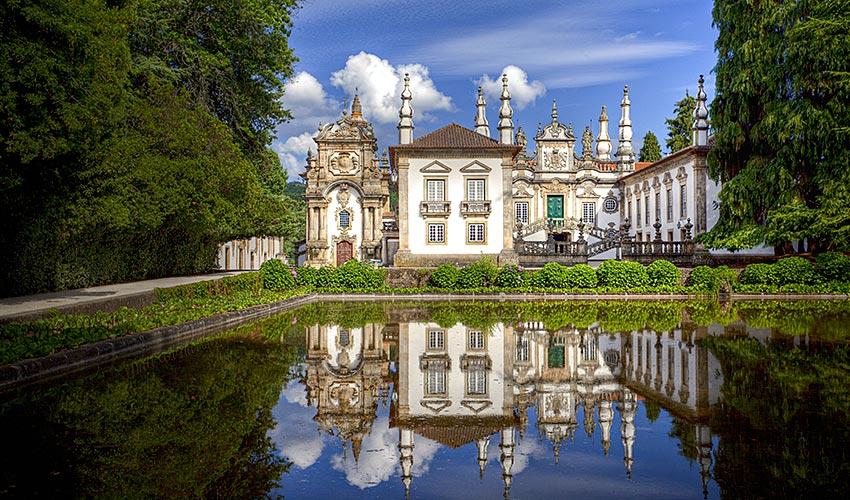
Situated at the foothills of the majestic slopes of Serra do Marão, Vila Real is a small, lively city in north-eastern Portugal. Founded by King Dinis in 1289, Vila Real played an important role in the history of Portugal. It was the birthplace of Diogo Cão, the first explorer to reach the Congo river, and António da Silveira Pinto da Fonseca (known as the Count of Amarante), who was an influential member of the Portuguese military and lead numerous uprisings against the Liberal constitution. Many aristocrats built grand palaces here during the 16th and 17th centuries, befitting the city’s literal name, ‘royal villa’.
Vila Real is an ideal base for exploring the Douro river valley and following the famous Port Wine Route. Port wine begins its life in wine estates south of the city, planted in terraced vineyards along steep riverbanks. Early autumn is the best time to visit as many farms welcome visitors and you can watch the workers picking grapes, often singing while they work. For centuries, agriculture has been an important means of livelihood in this region.
There are many charming towns and villages near Vila Real, including Peso da Régua and Sabrosa, which boasts 15th century houses and vineyards set above the Pinhão river. Sample excellent wines throughout the region, including those from Mesão Frio and Murça, a town also known for its local honey, goat’s cheese and sausages. The historic city of Chaves is famous for its hot springs and the Roman bridge, which was built around AD 100. Also worth visiting are the nearby towns of Bisalhães, renowned for its unusual black pottery and Boticas, where you can taste the famous vinho dos mortos (wine of the dead), which is buried in deep cellars to mature.
Places to See
Palácio de Mateus (Mateus Palace) (Vila Real)
The splendid Palácio de Mateus manor house is depicted on the labels of the famous Mateus rosé wine. Built in the 18th century, the building has an impressive baroque façade and ornate pinnacles on the roof. The beautifully landscaped gardens feature elegant statues as well as a stunning reflecting pond in the front of the palace. Musical events often take place in the palace and guided tours are also possible.
Santuário de Panóias (Vila Real)
A short distance from Vila Real, this ancient shrine was used as a place of worship and animal sacrifice. Dating back to the early 3rd century, this unique site is composed of three huge granite rocks with cavities dug out of them. Inscriptions in Latin and Greek describe the rituals undertaken at this sacrificial site, first used by tribes to worship the god Serapis and then by Romans, Celts and Visigoths, who made sacrifices to their own gods.
Parque Natural do Alvão (Alvão Natural Park)
Discover the pristine beauty of Alvão Natural Park, a protected area extending over 7,220 hectares (17,841 acres) with two distinct territories: a mountainous zone which is often covered in snow and a basal zone of river valleys. Rare species found in the park include Iberian wolves and golden eagles, as well as an enormous diversity of trees and plants. Visitors can try rafting down the many watercourses or simply enjoy the unspoilt scenery of cascading waterfalls and traditional villages built from slate and schist.
Igreja de Santa Bárbara (Santa Barbara church) (Boticas)
This former parish church contains a wooden pelican from the 17th century in the sacristy. According to local folklore, the bird wounded its own breast to feed the baby birds with its blood, symbolising the way Jesus gave his own blood to his people.
Ponte de Pedrinha (Little Stone bridge) (Boticas)
This Romanesque bridge containing five arches traverses the Beça river. According to the local legend, the Moors building the bridge only worked at night because they were afraid of getting killed during the day. The workers had to flee before the bridge was finished, but only one stone was missing, so it became known as the Little Stone bridge.
Igreja Matriz do Divino Salvador (Church of the Divine Saviour’s Mother) (Ribeira de Pena)
This sober 18th century church is the most important monument in Ribeira de Pena. The striking features include the baroque façade, high altar and beautiful wooden confessional chairs. This was also the place where Portuguese writer Camilo Castelo Branco got married when he was 16 years old.
Ponte de Arame ou Ponte Pênsil (Wire Bridge) (Ribeira de Pena)
The Ponte Pênsil is a wire suspension bridge that crosses the Tâmega river, connecting the towns of Ribeira de Pena and Santo Aleixo d’Além Tâmega. The 20-metre long bridge is a fascinating historical attraction, suspended by over 100 twisted wires, with two steel cables that support the bridge. It was built to serve the populations of both sides of the river and until 1963, was the only crossing point for local inhabitants.
Parque de Lazer de Bragadas (Bragadas Leisure Park) (Ribeira de Pena)
Surrounded by pine trees, this park is situated in a beautiful forested area and offers visitors an open space to relax. Ideal for groups and families, facilities include picnic tables, barbecue grills, a soccer field, children’s playground and a covered shelter for over 300 people.